
Sardar Asif Ali Zardari
Asif Zardari holds a significant place in Pakistan’s political history as a civilian leader from Sindh who served as President in two separate terms. His political life is closely linked with the Bhutto family through his marriage to Benazir Bhutto, the former two-time Prime Minister of Pakistan and daughter of former Prime Minister Zulfikar Ali Bhutto.
Sardar Asif Ali Zardari’s Background and Education
Zardari Sahib is a well-known Pakistani political leader from Sindh province. He was born in 1955 in Nawabshah into a Sindhi landowning family. His father, Hakim Ali Zardari, was a businessman and politician, which gave him early exposure to politics and public life. In his youth, Asif Ali studied in Karachi and also spent time abroad for education.
Before entering mainstream politics, he managed his family’s business, including cinema operations inf Karachi, and also showed interest in sports like polo and boxing. His early political career was not very successful, as he lost a local election in the 1980s. However, his life changed after his marriage to Benazir Bhutto in 1987, a major political figure and future Prime Minister of Pakistan. This connection brought him into the center of national politics and the Pakistan Peoples Party.
After marriage, he gradually became active in politics and later served in different government roles. Over time, he became an important leader in the PPP and eventually co-chairman of the party. His political journey has included both power and challenges, including long periods of imprisonment and legal cases, which he has always described as politically motivated.
After the assassination of Benazir Bhutto in 2007, he returned to Pakistan from abroad and took leadership of the PPP. Under his leadership, the party won the 2008 general elections, and he became the 1st President of Pakistan from Sindhi in 2008, serving until 2013. During his tenure, constitutional reforms were introduced to strengthen democracy and reduce presidential powers.
In 2024, he returned to the presidency for a second non-consecutive term, making history as one of the few leaders in Pakistan to hold the office twice. His political career is marked by resilience, controversy, and strong influence within Pakistani politics. Today, he remains an important figure in national leadership and party politics.
Political Career of Sardar Asif Ali Zardari
Early Entry into Politics
He began his political journey in the 1980s. Coming from a well-known landowning family in Sindh, he was already familiar with local influence and social networks. His early attempt in politics was not successful, as he lost a district-level election in Nawabshah. After this setback, he temporarily focused on business activities, especially property dealings and managing his family’s cinema business in Karachi.
Despite the early failure, his political interest remained active, and his life soon took a major turn through his marriage in 1987 to Benazir Bhutto, which connected him directly to one of Pakistan’s most powerful political families.
Rise Through Pakistan Peoples Party
After his marriage, he became closely associated with the Pakistan Peoples Party. He slowly entered party activities and began representing the Bhutto family in political matters. His position grew stronger after Benazir Bhutto became Prime Minister in 1988.
During the 1990s, he held government positions, including roles related to investment and environmental planning. However, his political journey was interrupted several times due to legal cases and arrests, which kept him away from active politics for long periods.
Legal Challenges and Imprisonment Phase
A major part of his political career includes long legal struggles. He was arrested in the 1990s on multiple charges, including corruption and other criminal allegations. He remained in jail for several years without a final conviction.
During this period, he became a controversial figure in Pakistani politics. His supporters claimed that the cases were politically motivated, while critics saw them as evidence of corruption. After years of imprisonment, he was released in 2004 and spent some time in self-exile in Dubai before returning to politics.
Return to Politics After 2007
The assassination of his wiefe in 2007 became a turning point in his life and political career. After her death, he returned to Pakistan and took control of the Party He was appointed co-chairman of the party and later became the main leader.
Under his leadership, the PPP won the 2008 general elections. He played a key role in forming a coalition government and strengthening his political position in the country.
President of Pakistan (2008–2013)
In 2008, Sardar Asif Ali Zardari was elected President of Pakistan. His presidency focused on democratic reforms and strengthening parliamentary governance. One of his major achievements was the 18th Constitutional Amendment in 2010, which reduced presidential powers and increased authority of the parliament and provinces.
His tenure also faced challenges such as economic instability, terrorism issues, and natural disasters like floods. Despite criticism, he became the first elected president in Pakistan to complete a full five-year term in 2013.
Political Role After Presidency
After completing his term, he remained active in politics as a senior leader of the PPP. He continued to influence party decisions and national politics. His son, Bilawal, also became an important political figure and later served as Foreign Minister of Pakistan. Zardari remained a central figure behind PPP’s strategy, coalition building, and political negotiations at the national level.
Second Presidency and Return to Power (2024)
In 2024, Zardari Asif made a political comeback and was elected as the 14th President of Pakistan for a second non-consecutive term. This return marked a rare achievement in the country’s political history.
His second term again highlighted his ability to build alliances and remain relevant in changing political conditions. It also reinforced his position as one of the most experienced political leaders in Pakistan.
Overall Political Impact
Sardar Asif Ali Zardari’s career is marked by long political struggles, resilience, and continuous influence. He has served as party leader, government minister, and twice as President. While his career includes both praise and criticism, he remains one of the most significant and powerful figures in modern Pakistani politics.
Political Timeline Snapshot
A concise overview of Asif Ali Zardari’s major political journey, including his presidency, reforms, and return to power.
First Presidential Term Begins
2008Assumed office as the 11th President of Pakistan after PPP coalition victory.
18th Amendment Reform
2010Strengthened parliamentary democracy by reducing presidential powers.
Historic Term Completion
2013Became first elected president in Pakistan to complete a full five-year term.
Political Comeback
2007–2023Returned to Pakistan after exile and rebuilt PPP leadership role.
Second Presidential Term
2024 – PresentRe-elected as 14th President of Pakistan through coalition agreement.
Marriage and Family Life
The personal life of Asif Ali Zardari is closely connected with one of Pakistan’s most influential political families, which has shaped both his private world and public identity.
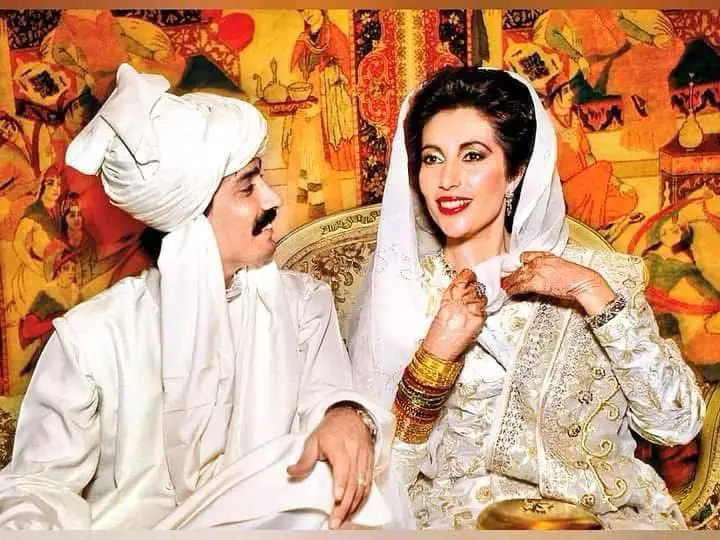
In 1987, he married Benazir Bhutto in a grand ceremony that symbolized the union of two prominent Sindhi political families. This marriage brought him into the national spotlight and connected him directly with the Bhutto legacy. While Benazir Bhutto was deeply engaged in national politics, Zardari maintained a supportive role within the family structure, especially during the early years of their marriage.
The couple had three children, who later became an important part of Pakistan’s political and social landscape. Their son, Bilawal Bhutto Zardari, was named as the political heir of the Bhutto family and later assumed leadership of the Pakistan Peoples Party. He represents the continuation of a political legacy that spans generations.
Their daughters, Bakhtawar Bhutto Zardari and Aseefa Bhutto Zardari, have also become public figures in their own right. Although they are not directly active in day-to-day party leadership, they participate in social initiatives, charitable work, and public awareness campaigns connected to education, health, and women’s empowerment.
A major turning point in the family’s life came after the tragic assassination of Benazir Bhutto in 2007. This event deeply affected the family and shifted responsibilities onto Zardari, who became the primary guardian of the children. During this period, the family remained under intense public attention, and their private life became closely linked with national politics.
Beyond the immediate household, Zardari’s family includes strong political connections. His sister, Faryal Talpur, is an active political figure within the Pakistan Peoples Party, and other relatives have also participated in provincial political roles. This extended family network has helped maintain the family’s influence in Sindh and national politics over time.
Despite political pressures and public scrutiny, the family has maintained a strong internal structure, with a focus on unity and continuity. Their household is often seen as a symbol of political legacy, where personal relationships and public responsibilities are closely intertwined.
Today, the Zardari-Bhutto family remains one of Pakistan’s most recognized political families, representing continuity across generations while balancing public life with private resilience.
Achievements and Reforms by Sardar Asif Ali Zardari
Achievements and Reforms of Asif Ali Zardari
Asif Ali Zardari has played a long and complex role in Pakistan’s political development. His contributions are mainly linked with constitutional reforms, democratic transition, and institutional restructuring during his leadership periods.
Restoration of Civilian Political Balance
One of his key political achievements was helping restore balance between state institutions after a long period of military-led governance in Pakistan. During his presidency, he supported shifting authority away from the presidency and strengthening elected institutions, which helped reduce centralised control and encouraged parliamentary decision-making.
Historic Constitutional Reset
A major reform under his leadership was the transformation of Pakistan’s constitutional framework through the 18th Amendment. This reform did more than reduce presidential powers—it also removed outdated legal provisions that had allowed excessive executive control in the past. It introduced a more stable democratic structure where parliament became the central authority for legislation and governance.
Strengthening of Provincial Rights
Another important reform was the expansion of provincial autonomy. His government supported transferring several administrative and financial responsibilities to provincial governments. This step allowed provinces to plan development projects according to their own needs and reduced long-standing political tensions between federal and regional authorities.
Institutional Independence Efforts
During his tenure, steps were taken to improve the independence of key national institutions. Electoral processes were gradually restructured to ensure more transparency, and efforts were made to support judicial independence. These changes contributed to building public confidence in democratic systems.
Crisis Governance and Stability Management
His leadership period included major national crises, including natural disasters and internal security challenges. Instead of allowing political disruption, his administration focused on maintaining continuity of governance. Relief coordination mechanisms were strengthened, and cooperation with international organizations helped manage emergency responses more effectively.
Diplomatic Engagement and Global Positioning
He also played a role in expanding Pakistan’s diplomatic outreach. His government maintained engagement with global partners and participated in international forums to present Pakistan’s position on security, development, and regional cooperation. This helped keep Pakistan politically connected during a time of global uncertainty.
Political Continuity and Coalition Building
A notable feature of his career is his ability to sustain coalition governments. He often worked with multiple political parties, managing diverse interests within the same government framework. This approach helped reduce political deadlocks and supported smoother governmental transitions.
Modern Political Comeback
His return to the presidency in 2024 added a rare dimension to his political journey, showing long-term relevance in national politics. It also demonstrated his ability to adapt to changing political environments while remaining a central figure in Pakistan’s governance structure.
Overall, his achievements are mainly linked with constitutional restructuring, decentralisation of power, and maintaining political continuity during challenging periods in Pakistan’s modern history.
FAQs
Who is Asif Ali Zardari?
He is Pakistan’s president, a seasoned PPP leader and widower of Benazir Bhutto. Born in Karachi in 1955, he previously served as president from 2008–2013, became a symbol of coalition politics, and remains influential in Pakistan’s power structure.
Where is Asif Ali Zardari today?
In general, Asif Ali Zardari is based in Pakistan, mainly between Islamabad, where the presidency is located, and Sindh/Karachi, his political stronghold and home region.
What is the age of Asif Ali Zardari?
Asif Ali Zardari is 70 years old today. He was born on 26 July 1955, so he will turn 71 on 26 July 2026.
What is the net worth of Asif Ali Zardari?
Asif Ali Zardari’s verified net worth is not publicly confirmed. His 2024 self-declared assets were about Rs2 billion — roughly US$7.2 million — while some unofficial wealth sites estimate US$1.8 billion, but those are not audited figures.
What is the educaiton of Asif Ali Zardari?
Asif Ali Zardari’s official education record: early education at Karachi Grammar School, then Cadet College Petaro, followed by further education in London. His London qualification/degree is not publicly verified; Cadet College Petaro was not a degree-granting college.
How many brothers of Asif Ali Zardari?
Asif Ali Zardari has no brothers. He is commonly described as the only son of Hakim Ali Zardari. He has sisters, including Faryal Talpur and Azra Fazal Pechuho.
Who was the mother of Asif Ali Zardari?
Asif Ali Zardari’s biological mother was Begum Bilquis Sultana Zardari. His father, Hakim Ali Zardari, later married Zareen Ara Bukhari, who is described in some reports as his mother/stepmother.
How many sugar mills of Asif Ali Zardari?
No verified direct ownership. Reports link him to 5 to 18 sugar mills, but his side denies ownership.
When did Asif Ali Zardari Become president?
Asif Ali Zardari became President of Pakistan twice.
He first took office on 9 September 2008 as the 11th President of Pakistan and completed his term in 2013. He became president again after the 2024 election and took oath on 10 March 2024 as the 14th President of Pakistan. He is the first civilian in Pakistan’s history to be elected president twice.
When did Asif Ali Zardari release from jail?
Asif Ali Zardari was released from jail on 22 November 2004, after nearly eight years in custody.
How many years Asif Ali Zardari in jail?
Asif Ali Zardari spent about 11 years in jail in total, across different periods.