
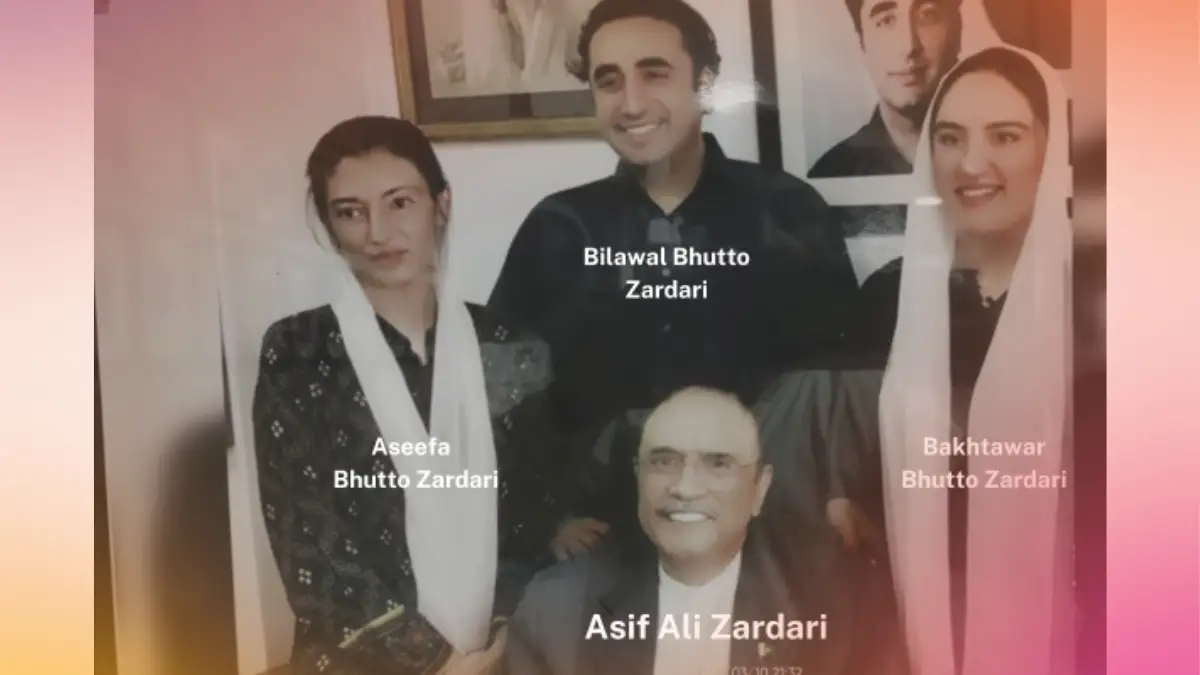
The Bhutto–Zardari family is one of the most influential political dynasties in the history of Pakistan. Spanning four generations of public service, the family has produced two Prime Ministers, two Presidents, and numerous members of the National and Provincial Assemblies. This section profiles the immediate family of President Sardar Asif Ali Zardari — his late wife, his three children, his father, and his sisters — whose intertwined lives form a defining chapter of modern Pakistani political history.
The Dynasty at a Glance
4
Generations in public life
2
Prime Ministers
2
Presidents of Pakistan
50+
Years of political influence
Origins of a Political Dynasty
The family’s political story begins with Zulfikar Ali Bhutto, the founder of the Pakistan Peoples Party (PPP) in 1967 and later the country’s President and ninth Prime Minister. His populist platform — captured in the slogan “roti, kapra aur makaan” (bread, clothing and shelter) — reshaped Pakistani politics and built a mass base in Sindh and Punjab that endures to this day. His execution in 1979 under a military regime transformed the Bhutto name into a powerful symbol of democratic struggle and sacrifice, a symbolism that would define every generation that followed.
That legacy passed to his daughter, Benazir Bhutto, who became the first woman to lead a democratic government in a Muslim-majority nation. Her marriage to Asif Ali Zardari in 1987 united the Bhutto family of Larkana with the Zardari family of Nawabshah — two of the most prominent landed political households in Sindh — and carried the dynasty into a new generation now represented by their children Bilawal, Bakhtawar and Aseefa.
Two Families, One Legacy
Understanding the family requires recognising that it is, in fact, the merger of two distinct lineages. The Bhuttos of Larkana brought the legacy of Zulfikar Ali Bhutto and Benazir Bhutto, the charismatic founders and leaders of the PPP. The Zardaris of Nawabshah — led by Hakim Ali Zardari and his children Asif, Faryal Talpur and Azra Fazal Pechuho — contributed a powerful network of landed influence and organisational strength in interior Sindh. The combined surname “Bhutto Zardari”, carried by the children, deliberately signals this union and the continuity of both traditions.
Immediate Family Members
- Benazir Bhutto — Wife; two-time Prime Minister of Pakistan (1988–1990, 1993–1996) and the first woman to lead a Muslim-majority nation.
- Bilawal Bhutto Zardari — Son; Chairman of the PPP and former Foreign Minister of Pakistan.
- Bakhtawar Bhutto Zardari — Elder daughter; social activist and philanthropist.
- Aseefa Bhutto Zardari — Younger daughter; Member of the National Assembly and polio eradication advocate.
- Hakim Ali Zardari — Father; politician, landlord, businessman and cinema owner from Nawabshah.
- Faryal Talpur — Sister; senior PPP politician and former Member of the National Assembly.
- Azra Fazal Pechuho — Sister; medical doctor and Sindh Provincial Minister for Health.
A Family Defined by Sacrifice and Resilience
Few political families anywhere have endured as much personal tragedy and political adversity as the Bhutto–Zardaris. Zulfikar Ali Bhutto was executed; Benazir Bhutto was assassinated; two of her brothers died in contested circumstances; and Asif Ali Zardari spent roughly eleven years in prison without a final conviction. Time and again, the family has absorbed loss and returned to the centre of national life. This pattern of sacrifice followed by resurgence is central to the family’s identity and to its enduring connection with its political base, particularly in Sindh.
The Next Generation
Today the family’s future rests largely with the third generation. Bilawal Bhutto Zardari leads the PPP and is widely viewed as a potential future Prime Minister; Aseefa Bhutto Zardari combines public-health advocacy with a parliamentary role; and Bakhtawar Bhutto Zardari contributes through philanthropy and social awareness. Together with the senior generation — President Asif Ali Zardari and his politically active sisters — they ensure the family’s continued presence across politics, health policy and civil society.
Explore the Family
Use the profiles linked above to read detailed biographies of each family member, or visit the political timeline to see how the family’s major milestones fit together. To learn more about President Asif Ali Zardari himself, see the full biography and leadership journey.
The Family’s Roots in Sindh
Both halves of the family draw their strength from the province of Sindh, and any understanding of the Bhutto–Zardaris must begin there. The Bhuttos are associated above all with Larkana, while the Zardaris are rooted in Nawabshah (Shaheed Benazirabad). These are not merely birthplaces but enduring political constituencies, where ties of land, kinship and patronage have sustained the family’s electoral dominance across decades. The Pakistan Peoples Party’s deep base in rural Sindh is inseparable from the family’s presence there, and the loyalty of these constituencies has repeatedly allowed the family to weather national political storms that might have ended a less rooted dynasty.
This regional foundation also explains the division of labour visible among the family’s members. While national figures such as Benazir Bhutto and Asif Ali Zardari operated on the federal stage, organisers like Faryal Talpur tended the party’s machinery in Sindh, and policy specialists like Azra Fazal Pechuho translated influence into provincial governance. The result is a family that functions less like a collection of individuals and more like an integrated political institution.
Why the Bhutto–Zardari Story Matters
The story of the Bhutto–Zardari family is, in many ways, the story of Pakistan’s turbulent journey through democracy, military rule, and back again. Its triumphs and tragedies have mirrored the nation’s own, and its members have repeatedly been at the heart of the country’s most consequential moments — from the founding of the PPP and the framing of the 1973 Constitution to the 18th Amendment and the historic election of a civilian president to two separate terms. For students of South Asian politics, the family offers a unique lens through which to examine dynasty, democracy and resilience in a complex and rapidly changing nation.
Frequently Asked Questions
How many children does Asif Ali Zardari have?
Asif Ali Zardari has three children with Benazir Bhutto: a son, Bilawal Bhutto Zardari, and two daughters, Bakhtawar and Aseefa Bhutto Zardari.
Who is the political heir of the Bhutto–Zardari family?
Bilawal Bhutto Zardari was named Chairman of the Pakistan Peoples Party in 2007 and is widely regarded as the political heir of the family legacy.
How are the Bhutto and Zardari families connected?
The two families were united by the 1987 marriage of Benazir Bhutto and Asif Ali Zardari, joining the Bhuttos of Larkana with the Zardaris of Nawabshah.