
Benazir Bhutto: What is the biggest assissination in history
How was Benazir Bhutto assasinated
Assassinated in Rawalpindi on 27 December 2007, moments after addressing her supporters at Liaquat Bagh.
As the wife of President Asif Ali Zardari and the daughter of Prime Minister Zulfikar Ali Bhutto, she stood at the very centre of the Bhutto–Zardari political dynasty for more than three decades.
Her life — marked by historic achievement, repeated imprisonment, exile, and ultimately assassination — remains one of the defining stories of modern South Asian politics. Explore the full story of her husband and successor on the official Asif Ali Zardari homepage.
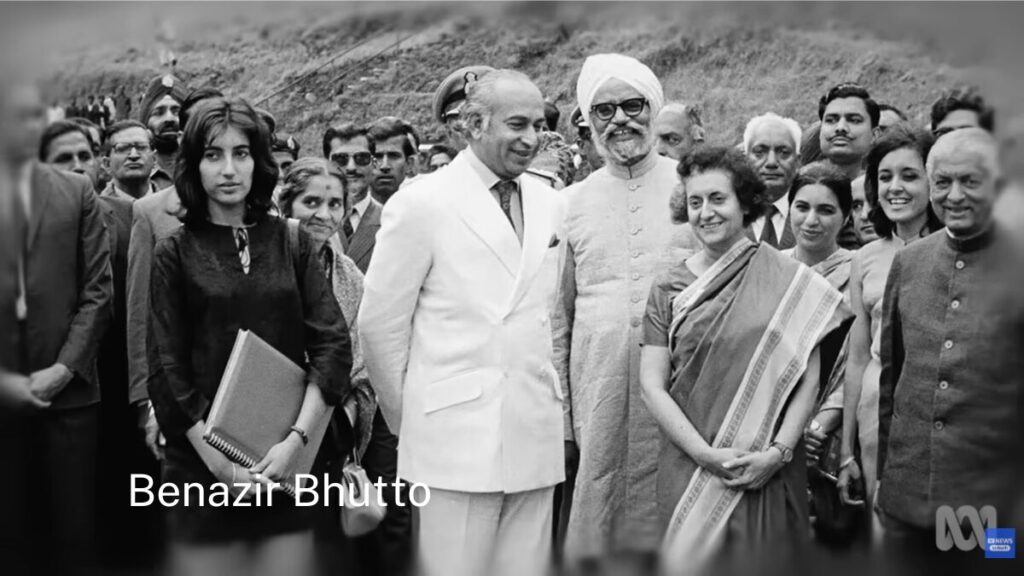
Quick Facts: Benazir Bhutto daughter Zulfiqar Bhutto
| Full Name | Benazir Bhutto |
| Born | 21 June 1953, Karachi, Sindh |
| Died | 27 December 2007, Rawalpindi (assassinated) |
| Education | Harvard University; University of Oxford |
| Office | Prime Minister of Pakistan (1988–90, 1993–96) |
| Party | Pakistan Peoples Party (Chairperson) |
| Spouse | Asif Ali Zardari (m. 1987) |
| Children | Bilawal, Bakhtawar, Aseefa |
Family Background and Early Years
Benazir Bhutto was born on 21 June 1953 in Karachi into the aristocratic and politically powerful Bhutto family of Sindh, of mixed Sindhi and Kurdish parentage.
She was the eldest of four children of Zulfikar Ali Bhutto, the founder of the Pakistan Peoples Party and later President and Prime Minister of Pakistan, and his wife Begum Nusrat Bhutto.
Raised in an atmosphere saturated with politics and public service, she was groomed from an early age for leadership and exposed to the ideals of democratic socialism that her father championed.
Her academic path was exceptional. She studied at Harvard University’s Radcliffe College, graduating with a degree in comparative government, before continuing to the University of Oxford, where she read philosophy, politics and economics.
At Oxford she made history as the first Asian woman to be elected President of the prestigious Oxford Union debating society — an early signal of the rhetorical skill and political ambition that would define her career.
Trial by Fire: The Movement for Democracy
Benazir returned to Pakistan in 1977, only for her father’s government to be overthrown in a military coup led by General Zia-ul-Haq. Zulfikar Ali Bhutto was imprisoned and, in 1979, executed — a trauma that transformed Benazir from a promising young graduate into a hardened political fighter.
Together with her mother Nusrat, she took control of the PPP and led the Movement for the Restoration of Democracy against the military dictatorship.
During these years she endured repeated detention, house arrest and solitary confinement, followed by years of exile in London.
Rather than break her, this period built her reputation as the courageous standard-bearer of Pakistan’s democratic opposition, admired internationally as a symbol of resistance to authoritarian rule.
Why did Benazir married Asif Ali Zardari
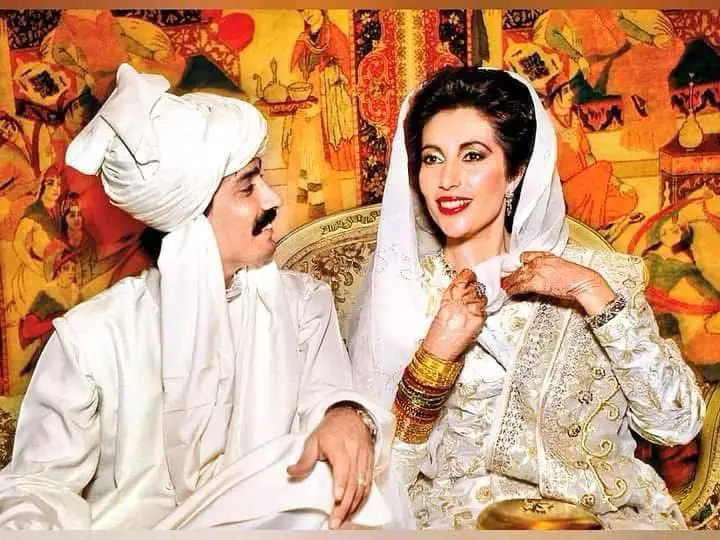
In December 1987, Benazir Bhutto married Asif Ali Zardari in a landmark Karachi ceremony that joined two influential Sindhi families. Though initially an arranged match, the marriage became a lasting political partnership.
The couple had three children — son Bilawal in 1988 and daughters Bakhtawar and Aseefa — who would each go on to play roles in the family’s continuing public life.
First Woman Prime Minister of the Muslim World
Following the death of General Zia in 1988, Benazir led the PPP to electoral victory and, at the age of 35, became Prime Minister of Pakistan — the first woman to head the government of any Muslim-majority country and one of the youngest leaders in the world at the time.
Her first term focused on social development, women’s rights, press freedom and the easing of restrictions imposed under military rule.
Her government was dismissed in 1990 amid political confrontation, but she returned to power in 1993 for a second term.
Across both administrations she pursued an agenda of education, health, rural electrification and the integration of women into public life, while navigating intense opposition, institutional rivalry and economic pressures.
Exile, Return and Assassination
After her second dismissal in 1996 and years of legal cases and self-imposed exile in Dubai and London, Benazir negotiated her return to Pakistan in October 2007 to contest fresh elections. Her homecoming drew enormous crowds — and an immediate assassination attempt.
On 27 December 2007, after addressing a rally in Rawalpindi, she was assassinated in a gun-and-bomb attack. Her death sent shockwaves across the world and reshaped the political landscape, propelling her widower Asif Ali Zardari and son Bilawal into the leadership of the PPP.
Legacy
Benazir Bhutto’s legacy endures as a global symbol of democratic struggle, female political leadership and resilience in the face of repeated adversity. She remains a towering figure in Pakistani history, and her ideals continue to shape the party her family still leads.
To understand her place within the wider dynasty, explore the Bhutto–Zardari family section and the detailed political timeline.
Benazir Bhutto by the Numbers
35
Age when she became PM in 1988
2
Terms as Prime Minister
1st
Woman to lead a Muslim-majority nation
18
Years as PPP leader
Governance and Domestic Reforms
Across her two terms, Benazir Bhutto pursued an ambitious social agenda that reflected the PPP’s founding promise of “roti, kapra aur makaan” (bread, clothing and shelter).
She prioritised the expansion of primary education, the construction of health facilities and lady health-worker programmes, rural electrification, and the easing of restrictions on the press and civil society that had accumulated under military rule.
She also worked to bring women into the formal workforce and public administration, appointing women to senior posts and establishing institutions aimed at women’s development — reforms that were notable in their regional and historical context.
Challenges in Office
Her premierships were also marked by persistent structural obstacles.
Both of her governments operated under a constitutional arrangement that gave the President sweeping powers to dismiss the assemblies, and both were ultimately dissolved before completing their terms amid allegations of corruption and confrontations with the establishment.
She governed in a period of severe economic constraints, ethnic tensions in Karachi, and a complex regional security environment.
These pressures meant that many of her reform ambitions were only partially realised, a reality she frequently attributed to the limits placed on elected civilian authority.
International Stature
Internationally, Benazir Bhutto became one of the most recognised political figures of her generation. Articulate, Western-educated and charismatic, she was a powerful global ambassador for Pakistan and for the cause of democratic governance in the Muslim world.
She delivered widely covered addresses at international forums and universities, and after leaving office she remained a sought-after voice on democracy, moderation and women’s rights.
Her writings and speeches articulated a vision of reconciliation between Islam and modern democratic values that continues to be studied and debated.
The 2007 Homecoming: A Nation’s Hope Returns
After roughly eight years of self-imposed exile spent largely between London and Dubai, Benazir Bhutto landed in Karachi on 18 October 2007.
The scenes that greeted her were extraordinary: hundreds of thousands of supporters poured into the streets, waving the red, green and black flags of the Pakistan People’s Party and chanting her name.
Her return had been negotiated under intense pressure. It was accompanied by understandings with the military establishment of General Pervez Musharraf.
Washington also gave quiet encouragement, viewing her as a stabilising democratic figure at a moment when Pakistan was central to the war in Afghanistan.
The euphoria was short-lived. As her motorcade made its slow journey from the airport toward a planned rally, two explosions tore through the procession near her vehicle just after midnight.
The twin blasts killed roughly 130 to 140 people and wounded hundreds more, making it one of the deadliest single attacks in Pakistan’s history. Bhutto herself survived, shielded inside her vehicle, but the message was unmistakable.
The following day she addressed the nation, declaring that she would not retreat into hiding and that fear would not dictate her conduct. Privately, however, she understood that she had powerful enemies, and she had already begun to name some of them.
The shocking story of Benazir Bhutto’s assassination
Two weeks before scheduled national elections, Benazir Bhutto travelled to Liaquat Bagh in Rawalpindi for a campaign rally. The venue carried grim historical weight: it was at this very ground in 1951 that Pakistan’s first Prime Minister, Liaquat Ali Khan, had been assassinated.
Despite repeated warnings from her advisers, foreign governments and her own family to limit her public exposure, Bhutto insisted on being visible and accessible to the people who had placed their hopes in her.
She delivered an energetic speech on jobs, education, reconciliation and the fight against extremism, and as her bulletproof vehicle began to move through the crowd, she stood up through the sunroof to wave to supporters.
At that moment an attacker near the vehicle opened fire and then detonated a suicide vest. Bhutto sustained fatal injuries and was rushed to Rawalpindi General Hospital, where she was pronounced dead. She was 54 years old.
The next day she was buried beside her father, Zulfikar Ali Bhutto, at the family mausoleum in Garhi Khuda Bakhsh in Sindh, with vast crowds walking for miles to pay their respects.
The Unanswered Questions: Investigation and Controversy

Few political killings have generated as much enduring controversy as the death of Benazir Bhutto. The Musharraf government initially attributed the assassination to the Pakistani Taliban and named militant commander Baitullah Mehsud, who denied involvement.
The official account drew immediate scepticism, intensified by a series of procedural failures. No autopsy was performed, partly in keeping with Islamic burial custom and at the wishes of her husband, Asif Ali Zardari.
Government officials at one stage suggested she had died after striking her head on a lever inside the vehicle rather than from the bullets or blast, a claim that conflicted with eyewitness accounts.
Most damaging to public confidence was the revelation that the crime scene was hosed down within hours, washing away potential forensic evidence before investigators could examine it thoroughly.
A United Nations inquiry commissioned in 2009 concluded that the assassination could have been prevented. It found that the authorities had failed to protect her.
Responsibility rested with the federal government, the Punjab provincial government and the Rawalpindi district police, despite their knowledge of the serious threats she faced.
The UN report pointedly noted that responsibility for her security rested with these authorities and that none had taken the necessary precautions.
Over the years, suspicion fell on a range of actors. Bhutto had privately warned, in letters and emails, of threats from within the state’s own military and intelligence apparatus, and several names recurred in public debate.
A Rawalpindi anti-terrorism court later indicted Pervez Musharraf in connection with the case; he left the country to avoid trial and consistently denied any role.
In 2017, a decade after the killing, the prosecution effectively collapsed: the five suspects who had been detained were acquitted, two senior police officers were convicted on lesser charges relating to the security lapse, and no one was ever convicted of ordering or carrying out the murder.
To this day, many Pakistanis regard the full truth as unresolved.
A Political Dynasty Continues
In a will that named her husband as her political heir, Benazir Bhutto set in motion the leadership transition of the Pakistan People’s Party.
Her son, Bilawal Bhutto Zardari, then only 19, was named chairman of the party, with Asif Ali Zardari serving as co-chairman and steering it through a period of profound grief.
Riding a wave of national sympathy, the PPP emerged as the largest force in the 2008 elections, and Zardari was elected President of Pakistan, a remarkable turn for a man who had himself spent years in prison.
The continuity of the Bhutto-Zardari political legacy across generations is explored further on our family overview and timeline pages.
Frequently Asked Questions
How many times was Benazir Bhutto Prime Minister?
She served as Prime Minister of Pakistan twice: from 1988 to 1990 and again from 1993 to 1996.
Why is Benazir Bhutto historically significant?
She was the first woman ever elected to lead the government of a Muslim-majority country, breaking a major barrier in global politics.
How did Benazir Bhutto die?
She was assassinated on 27 December 2007 in Rawalpindi after addressing an election rally.
Who were Benazir Bhutto’s children?
Her three children with Asif Ali Zardari are Bilawal, Bakhtawar and Aseefa Bhutto Zardari.
Who killed Benazir Bhutto?
No individual or group has ever been definitively convicted of ordering her murder. The government of the time blamed the Pakistani Taliban and named commander Baitullah Mehsud, who denied involvement.
A United Nations inquiry found that state authorities had failed to protect her, and in 2017 the five detained suspects were acquitted while two police officials were convicted only of charges related to the security failure. Many Pakistanis consider the case unresolved to this day.
Was there a survived assassination attempt before her death?
Yes. On the night of 18 October 2007, the day she returned to Karachi from exile, twin bomb blasts struck her motorcade and killed roughly 130 to 140 people. Bhutto survived that attack but was assassinated about ten weeks later in Rawalpindi on 27 December 2007.
Why was no autopsy performed?
No post-mortem examination was conducted, partly in line with Islamic burial tradition and at the wishes of her husband, Asif Ali Zardari, who arranged for her swift burial.
The absence of an autopsy, combined with the rapid hosing-down of the crime scene, became a major source of public controversy and contributed to lasting doubts about the official account of her death.
What did the United Nations inquiry conclude?
The 2009-2010 UN commission concluded that Benazir Bhutto’s assassination could have been prevented and that the federal government, the Punjab government and the Rawalpindi district police had failed to take adequate security measures despite being aware of the serious threats against her.
It also criticised the handling of the crime scene and the investigation.
What happened to the Pakistan People’s Party after her death?
In accordance with her will, her son Bilawal Bhutto Zardari became chairman of the PPP while her husband Asif Ali Zardari served as co-chairman.
The party won the 2008 general elections on a wave of sympathy, and Zardari was subsequently elected President of Pakistan, continuing the Bhutto-Zardari political legacy.
What is Benazir Bhutto’s lasting legacy?
She is remembered as a trailblazer who became the first woman to lead a Muslim-majority nation, as a symbol of democratic resistance to military rule, and as an advocate for women’s participation in public life.
Her image still appears in homes, shops and on billboards across Pakistan, and her speeches and writings on reconciling Islam with democratic values continue to be studied and debated.