Aseefa Bhutto Zardari (born 3 February 1993) is a Pakistani politician, public-health advocate and Member of the National Assembly of Pakistan. As the youngest daughter of President Asif Ali Zardari and the late Prime Minister Benazir Bhutto, she has carved out a distinctive identity that blends humanitarian campaigning with frontline politics, becoming one of the most recognisable younger figures in the Bhutto–Zardari family.
Quick Facts: Aseefa Bhutto Zardari
| Born | 3 February 1993, London |
| Parents | Asif Ali Zardari & Benazir Bhutto |
| Education | Oxford Brookes University (BA); University College London (MSc) |
| Known For | Polio eradication advocacy; Member of National Assembly |
| Cause | Global health, immunisation, women’s welfare |
Early Life and the First Polio Drops
Aseefa was born on 3 February 1993 in London, during a turbulent chapter in her parents’ political lives. Her name became linked to public health from infancy: she was the first child in Pakistan to be symbolically vaccinated when her mother, then Prime Minister, launched the country’s first National Immunisation Day in 1994. Benazir Bhutto personally administered the oral polio drops to her infant daughter as a powerful public endorsement of the nationwide campaign — an image that would later define Aseefa’s own life mission.
Education in Global Health
Aseefa pursued her higher education in the United Kingdom, earning a bachelor’s degree in politics and sociology from Oxford Brookes University, followed by a master’s degree in global health and development from University College London, completed in 2016. This academic grounding gave her genuine subject-matter expertise that distinguishes her advocacy from ceremonial roles, allowing her to engage with health policy on a technical level.
Polio Eradication Ambassador
In October 2009, while her father was President, Aseefa was appointed as a goodwill ambassador for polio eradication in Pakistan. Pakistan remains one of the few countries where the poliovirus is still endemic, and the campaign faces enormous obstacles including vaccine misinformation, security threats to health workers, and hard-to-reach populations. Aseefa has used her platform to promote immunisation drives, support frontline health workers, and raise international awareness, lending continuity to a cause that began on the day of her own first vaccination.
Entry into Frontline Politics
For years Aseefa remained focused on social causes rather than electoral politics, but she increasingly took on public-facing roles within the Pakistan Peoples Party, appearing at rallies and representing the family at major events. She subsequently entered the National Assembly of Pakistan as an elected representative, formalising her transition from activist to legislator and adding a third active political voice to the family alongside her brother Bilawal.
Public Profile and Causes
Beyond polio, Aseefa champions women’s empowerment, maternal and child health, and education — themes deeply rooted in her mother’s legacy. Her combination of academic credentials, humanitarian track record and political pedigree positions her as an influential figure in the family’s next generation. Explore the wider Bhutto–Zardari family and the political timeline for further context.
Aseefa Bhutto Zardari: Key Numbers
1994
First polio drops administered to her
2009
Named polio eradication ambassador
2
University degrees (UK)
MNA
Member of National Assembly
Why Pakistan’s Polio Fight Matters
Pakistan is one of the last places on earth where wild poliovirus remains endemic, which gives Aseefa’s advocacy genuine global significance. Eradicating the disease requires reaching every child with repeated doses of vaccine, a task complicated by misinformation, mistrust, displacement and threats to the safety of health workers. By lending a respected family name and her own academic expertise in global health to the campaign, Aseefa has helped sustain political attention and public confidence in immunisation at moments when the programme has faced serious setbacks. Her involvement connects a deeply personal story — the infant who received the country’s first symbolic drops — to a national public-health mission.
From Advocacy to Legislation
Aseefa’s move into the National Assembly marked a significant evolution in her public role. Rather than remaining solely a campaigner, she gained a formal platform from which to influence policy on the very issues she had long championed — health systems, women’s welfare and social protection. Her entry also reinforced the family’s multi-generational presence in elected institutions, complementing her brother Bilawal’s leadership of the party and giving the younger generation two distinct but coordinated political voices.
Carrying Forward a Maternal Legacy
Much of Aseefa’s public identity is consciously linked to her mother. Benazir Bhutto’s commitment to women’s empowerment, child health and education finds a direct continuation in Aseefa’s work. In speeches and public appearances she frequently invokes her mother’s example, positioning herself as both an heir to that legacy and an advocate equipped with contemporary expertise to advance it in a changed world.
A New Generation of Bhutto Women in Public Life
Aseefa belongs to a lineage of women who have repeatedly broken barriers in Pakistani public life, from her grandmother Begum Nusrat Bhutto, who co-led the party through the darkest years of military rule, to her mother Benazir, the first female prime minister of the Muslim world. Aseefa’s emergence continues this tradition into a third generation, but on her own terms — grounded in formal training in global health and a record of humanitarian campaigning that predates her entry into elected politics. Her trajectory suggests a model of leadership in which expertise and advocacy precede, and ultimately reinforce, electoral authority.
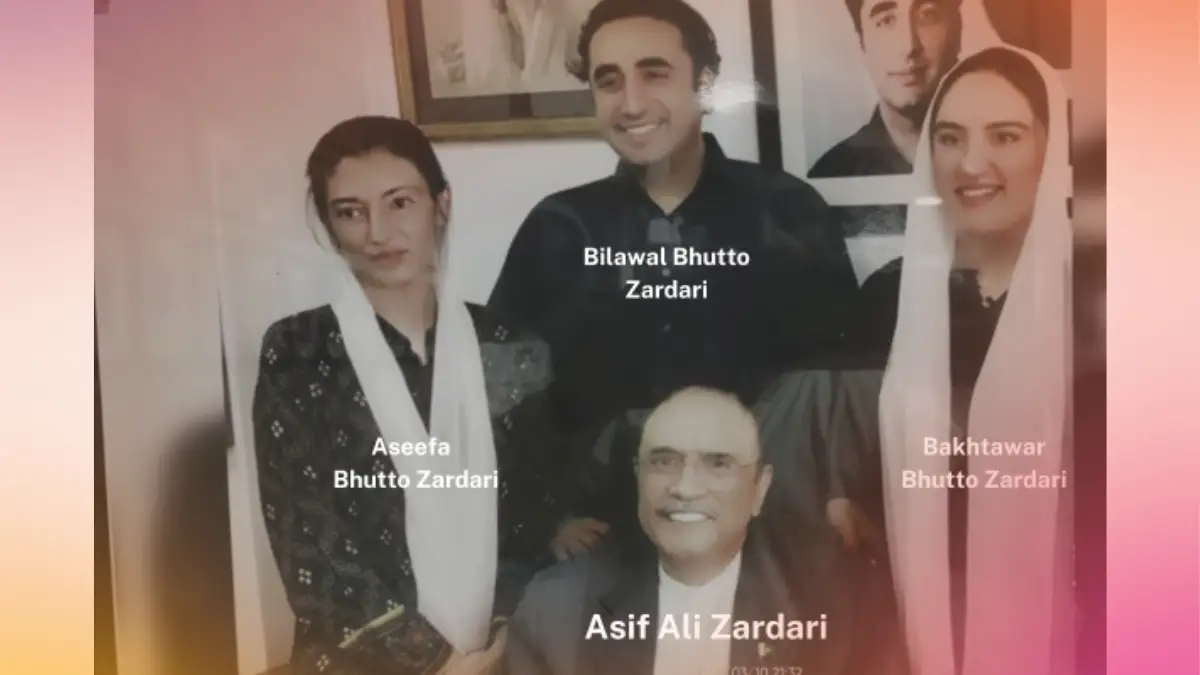
Within the family, she works alongside her brother Bilawal Bhutto Zardari, who leads the party, and her father President Asif Ali Zardari, while her sister Bakhtawar concentrates on philanthropy. Together they represent the contemporary face of a dynasty that has shaped Pakistani politics for more than half a century. For the full picture, see the Bhutto–Zardari family overview and the political timeline.
Frequently Asked Questions
Who is Aseefa Bhutto Zardari?
She is the youngest daughter of Asif Ali Zardari and Benazir Bhutto, a Member of the National Assembly and a goodwill ambassador for polio eradication.
Why is Aseefa associated with polio?
As an infant she was the first child symbolically vaccinated in Pakistan’s first immunisation drive in 1994, and she later became the official polio eradication ambassador.
What did Aseefa Bhutto Zardari study?
She holds a bachelor’s degree from Oxford Brookes University and a master’s in global health and development from University College London.