
How Many Children Does Asif Ali Zardari Have?
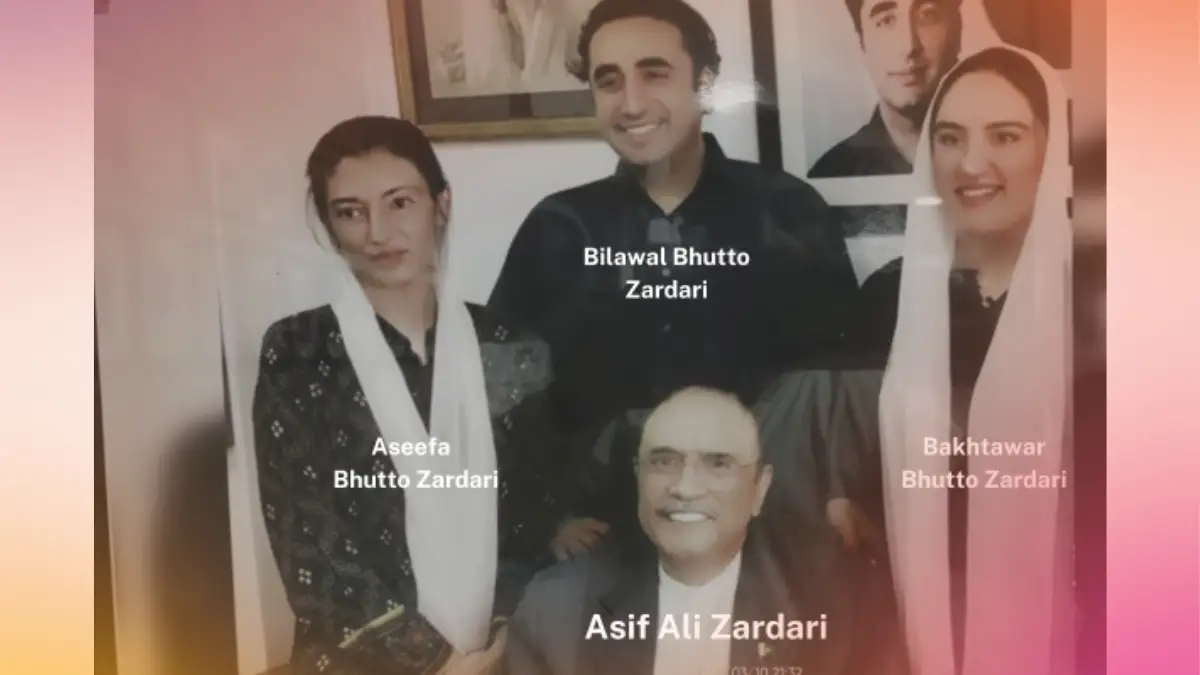
Asif Ali Zardari has three children with his late wife, former Prime Minister Benazir Bhutto: one son and two daughters. All three are now public figures in their own right, representing the third generation of one of Pakistan’s most prominent political dynasties. This article introduces each of them, their roles, and how together they carry forward the Bhutto–Zardari legacy.
The Three Children
3
Children in total
1
Son (Bilawal)
2
Daughters
3rd
Generation in politics
Bilawal Bhutto Zardari — The Eldest and Political Heir
Bilawal Bhutto Zardari, born on 21 September 1988 in Karachi, is the eldest child and the only son. Educated at Christ Church, University of Oxford, he was named Chairman of the Pakistan Peoples Party in 2007 at the age of nineteen, following his mother’s assassination. He later served as Foreign Minister of Pakistan from 2022 to 2023 and is a sitting Member of the National Assembly. Widely regarded as the political heir of the family, Bilawal leads the party his grandfather founded and is frequently mentioned as a potential future Prime Minister.
Bakhtawar Bhutto Zardari — The Elder Daughter
Bakhtawar Bhutto Zardari, born on 25 January 1990, is the elder daughter. Unlike her siblings, she has chosen a path centred on philanthropy, social awareness and creative work rather than electoral politics. She has been associated with charitable causes spanning health, education and disaster relief, and she married Mahmood Choudhry in 2021. Her role represents the humanitarian and cultural dimension of the family’s public presence.
Aseefa Bhutto Zardari — The Youngest and Health Advocate
Aseefa Bhutto Zardari, born on 3 February 1993 in London, is the youngest child. As an infant she became the first child symbolically vaccinated in Pakistan’s first national immunisation drive, and she later served as the country’s goodwill ambassador for polio eradication. Holding degrees from Oxford Brookes University and University College London, she combines genuine expertise in global health with a parliamentary role as a Member of the National Assembly, making her both an advocate and a legislator.
A Generation Shaped by Tragedy
The three children were profoundly shaped by the assassination of their mother in December 2007, when they were still young. In its aftermath, the family became a symbol of continuity and resilience, with the children stepping into public life under extraordinary circumstances. Their father, Asif Ali Zardari, became their primary guardian while simultaneously assuming national leadership, and the family navigated intense public attention together. This shared experience of loss and responsibility has defined the generation’s public identity.
Carrying the Legacy Forward
Between them, the three children embody different facets of the family legacy: Bilawal carries the political mantle, Aseefa blends health advocacy with parliamentary work, and Bakhtawar contributes through philanthropy and social causes. This division of roles allows the family to maintain a presence across politics, public health and civil society simultaneously. To read detailed biographies of each, explore the Bhutto–Zardari family section, or see how the generations connect on the political timeline.
The Meaning of the Combined Surname
All three children carry the combined surname “Bhutto Zardari”, a deliberate choice that merges the names of their two illustrious lineages. On their mother’s side, the Bhutto name connects them to Zulfikar Ali Bhutto, founder of the PPP, and to Benazir Bhutto, the first female prime minister of the Muslim world. On their father’s side, the Zardari name links them to the influential landed family of Nawabshah. The hyphenated identity is more than a formality; it signals the continuity of two political traditions and helps explain why the children command such strong loyalty within the party’s base. The Bhutto element in particular carries enormous symbolic weight, given the family’s history of sacrifice.
Education Across the Generation
One notable feature of this generation is its strong educational grounding, much of it obtained abroad. Bilawal studied at the University of Oxford, following his mother and grandfather; Aseefa earned degrees from Oxford Brookes University and University College London, specialising in global health and development. This international education has shaped how the siblings engage with contemporary issues such as climate change, public health and development, allowing them to combine the inherited authority of their name with modern technical knowledge. It also connects them to a long family tradition of elite international education.
The Future of the Dynasty
As President Asif Ali Zardari continues his second term and the senior generation remains active, attention increasingly turns to how the three children will shape the family’s future. Bilawal’s leadership of the PPP positions him at the forefront, but Aseefa’s growing political role and Bakhtawar’s social work mean the family maintains influence across multiple spheres. Whatever the years ahead hold, the children of Asif Ali Zardari and Benazir Bhutto will remain central figures in the story of Pakistani politics. For more detail on each, visit their individual profiles in the family section.
Three Distinct Paths, One Family
What makes this generation particularly interesting is that the three siblings have pursued genuinely distinct paths while remaining bound by a shared identity and purpose. Political dynasties do not always distribute roles so clearly, but in the case of the Bhutto–Zardari children the division between leadership, advocacy and philanthropy has allowed each to develop an individual profile without competing directly with the others. This complementary arrangement strengthens the family as a whole, giving it reach into parliament, into the world of public health, and into the humanitarian and cultural spheres at the same time, and it offers a useful illustration of how modern dynastic families sustain their influence across changing times.
Frequently Asked Questions
How many children does Asif Ali Zardari have?
He has three children with Benazir Bhutto: Bilawal, Bakhtawar and Aseefa Bhutto Zardari.
Who is the eldest child of Asif Ali Zardari?
Bilawal Bhutto Zardari, born in 1988, is the eldest and the only son.
Are all of Asif Ali Zardari’s children in politics?
Bilawal and Aseefa hold political and parliamentary roles, while Bakhtawar focuses on philanthropy and social causes rather than electoral politics.
Where were Asif Ali Zardari’s children born?
Bilawal was born in Karachi in 1988, Bakhtawar in 1990, and Aseefa in London in 1993.
What is the combined surname Bhutto Zardari?
It merges the maternal Bhutto and paternal Zardari names, signalling the union of two prominent Sindhi political families.